Date : 10 June 2026
Day : Wednesday
Time : 20.00 -22.00 Wib
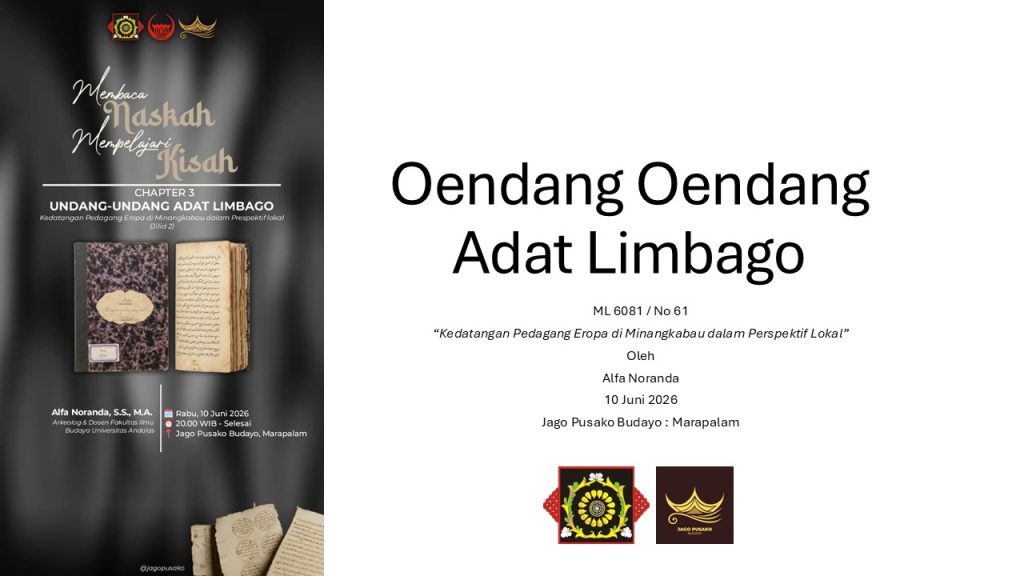
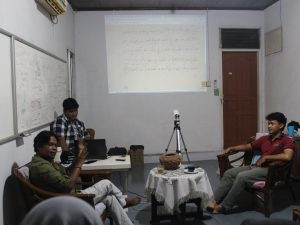
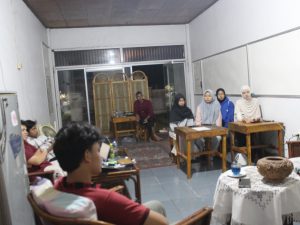
Manuscript Night is a routine activity held every week on Wednesday, this activity is organized by Jago Pusako Budayo in order to revitalize the culture of reading Arabic Malay to the younger generation. so much knowledge is stored in manuscripts written using Malay script makes a lot of knowledge stored and distances the younger generation of Minangkabau far from the cultural identity and local knowledge they have. The reading of the manuscripts that are used as a reading program are manuscripts related to Minangkabau history, so that understanding of the course of local history can be understood well by the younger generation, so that it can help the shift in knowledge that is currently happening in the West Sumatra region which is the center of Minangkabau civilization in the past. at this third meeting, Jago Pusako raised the title of the arrival of European traders in Minangkabau in a local perspective, where information about the arrival is told in the manuscript oendang oendang adat limbago ML 6801 / No.61 from pages 266-301 following the page numbering in the manuscript. Some of the knowledge obtained from the manuscripts read and studied are as follows:
The Dutch in Nagari Padang built a warehouse in 1663, they came again and they built a warehouse, so the Acehnese did not agree with the Padang people, so the Dutch Company and Nan Salapan who served were Datuk Rangkyo Kecil, and the four five people of Ka Nagari Salido (the interaction between Padang and Salido was because the four five people and Datuk Rang Kayo Kecik) said they would promise to defeat the Acehnese from Nagari Padang, then His self-styled outbreak broke out in Salido in 1664. Then the city was built on the island of Cingkia/Cingkuak/Cinangkiak, by the Dutch Company in 1665.
So the Malays attacked land and the Dutch komopeni came from the sea, to the Acehnese who were in the field, so the Acehnese fled to Binuang (Pauh area) Padang.
As for those ruled by Aceh, they are Alang Lawas, Parak Gadang, and Koto Baru, Parak Lawas, and Tanjung Sabar, so that is what the Acehnese ruled in Nagari Padang in the Hijri year. In the year Alif, at that time, the Dutch came to Nagari Padang and drove out the Acehnese who had ruled in Nagari Padang for forty-four (44) years. In that year, the Dutch company made a war in Hilir Batipuh (Pasar Batipuah Hilir) in the land of Caniago and those who brought the Dutch to Nagari Salida were made Panghulu 12, one Bandahara Maharaja Basa and in addition four people Datuak Tumanggung and Datuk Rangkayo Sirajo Koto Piliang and Datuak Rajo Inda Sati and Datuak Sutan Basa Caniago, that is the person who became Panghulu.
From reading the manuscript, we also found some other information related to interactions between European traders who were brought by representatives who came from the “Thirteen Town”.. …Another village is Padang Hilir Batipuah, another is Padang Binuang Pauah. And another is the village of Gurun, where the “pumpunan ikan” gather, the location where at that time there was a Paseban (meeting hall / meeting place with the King) which was visited by a group of parents (niniak of niniak or grandmother of grandmother) from Kubung Tiga Belas along with groups from Limau Manis and Lubuk Kilagan accompanied by the people of Tanjung Saba to get a decision to trade in the past.
This article states that the niniak descended from the niniak kubung tigo baleh, then the meeting of the laras nan duo in “limau manis” and “lubuak kilangan” then seen by the merchants were also given siriah pinang satahil (Chinese currency size) sapaho riyal in limau sapuluah riyal in lubuak kilangan, sapuluah riyal has been… then the niniak mamak berkumpullah laras nan duo in tanjuang sabar (area governed by Aceh) then all panghulu nan 20 received it with the appropriate (proper) manner of receiving it from the friend of the state from tuanku ampang lima (commander), then stayed for two nights then tuanku ampang (commander) ordered panghulu nan 12 two people to wear their clothes in an appropriate manner then they took them off and the gandang (drum) and sarunai (whistle) were hired by Alam Alam (flag) from the field datuk nan 20 delivered them together, then the gandang (drum) and sarunai (whistle) were heard then manusuang nusuang (manyonsong-nyonsong) niniak mamak datuak angku panglimo and bandaro when they have met both of them then answered tuanku ampang lima (commander) hand as well as tuanku bandaro and tuanku nan duabela. Then the balai Tampuruang then gathered there all the merchants to him to buy the siriah betel nut custom in front of tuanku ampang lima (commander) bandaro satahil sapaho, the custom has been accepted by niniak mamak, then tuanku panglima (commander) panghulu divided it into a portion by tuanku two portions by tuanku bandaro … brought to their respective homes, then came the day of speaking, then in …. to tuan komar when can met tuan with all of niniak mamak, datuak nan 13 koto, ready tuan then hilirlah Tuanku and all panghulu wore as appropriate then came out all the kebesaran (regalia), gandang (drum), sarunai (whistle) spread out Payung Ubur Ubur (umbrella jellyfish) and Alam Alam (flag), and the yellow and become also came out pulut pulut (?). Then after that they arrived at the Paseban (meeting hall with the king) then they stood in rows on the left and right, then the cannon sounded 13 shots, then they drank coffee and ate sadah/lontong ayak (traditional food) then they went home, all the panghulu went to their respective places, then the satahil sapaho custom was established in each nagari, then it was taken by the merchants and after … then all the datuak asked to go home and the traditional money was divided, by all the merchants gave twenty riyals to the tuan penghulu padang and twenty riyals to the merchants too, five riyals more than that then they shared it out then after that the 20 riyals were given to the buffalo and slaughtered in the middle of the “Gurun” (place in Parak Gadang Timur village), that is the tuanku panghulu all the contents of the nagari gave nyambal (cooking) but the people who did not give nyambal (cooking) gave all the people make-up and fences, but those who did not give nyambal (cooking) all the Imam’s (priest) , Khatib (preachers) and the Anak Radjo Radjo (king’s children) and were Marah (local leader with aceh ancestor) then they were service’s by tuanku panghulu by all panghulu by niniak mamak all of them rejoice on that day the custom of thirteen cities in Padang (easter side) inilah adat limbago rantau nan baradat radat, nan barantau boleh juga memberi utang dan menerima pusaka basuku batimbang itulah nan tiadalah buliah ubah ubahi, pindah daripada darat turun ke rantau (Custom in Padang with King of Minangkabau in Gurun now know as Parak Gadang Timur Village : Gurun Laweh and Aur Duri)